 中文
中文 English
 한국어
한국어 français
 Deutsch
 Español
 italiano
 русский
 português
 العربية
 Polska
We use cookies to offer you a better browsing experience, analyze site traffic and personalize content. Part of
the tracking is necessary to ensure SEO effectiveness,
By using this site, you agree to our use of cookies.
Visit our cookie policy to learn more.


Thermal Monocular: Introduction, Working Principles, and Key Advantages
Table of Content
[Hide]
Darkness and fog turn every shadow into a threat. Standard night vision fails without ambient light. A thermal monocular lets you see heat, not light, revealing what hides.
A thermal monocular is a handheld device that detects infrared radiation to display heat signatures as clear images. It works in total darkness and through obscurants, offering superior detection over regular night vision.

Understanding the core technology, performance in harsh conditions, and real-world advantages unlocks the full potential of thermal optics. The following sections cover operation, benefits, and the specific strengths that make modern thermal monoculars indispensable.
What Is a Thermal Monocular and How Does It Work?
Night vision amplifies light, but still leaves blind spots. A thermal monocular solves this by reading heat energy instead. This section clarifies what it is and how it functions.
A thermal monocular is a single-tube thermal imaging device that detects long-wave infrared energy emitted by objects. It converts temperature differences into a visible thermogram, requiring no external light source.
A thermal monocular contains a sulfur lens that focuses infrared radiation onto a microbolometer sensor array. Each pixel changes resistance based on absorbed heat, and readout circuits convert this into a temperature map. Non-uniformity correction (NUC) periodically recalibrates the sensor to maintain a clean image. The processor then renders a live view on an OLED display, usually with selectable color palettes such as white-hot or black-hot. Unlike image-intensifier night vision, thermal devices are truly passive and can detect subjects through light fog, smoke, and foliage because heat energy penetrates where visible light scatters.
Sensor sensitivity, measured as Noise Equivalent Temperature Difference (NETD), determines how well the device distinguishes subtle heat variations. A NETD below 50 mK ensures that even small temperature differences—such as an animal partially obscured by brush—remain visible. Resolution also plays a critical role: a 384×288 sensor provides workable detail, while 640×512 units deliver sharper identification at extended ranges. Understanding these specs helps users match device capability to specific missions, avoiding the common mistake of confusing detection range with positive identification distance.
Core Components of a Thermal Monocular
| Component | Function |
|---|---|
| Sulfur Lens | Transmits long-wave infrared and focuses it onto the sensor |
| Microbolometer Array | Absorbs IR radiation and converts it to electrical resistance changes |
| Readout & Processor | Translates sensor data into a calibrated thermal image |
| OLED Display | Shows the live thermogram to the user |
| Shutter/NUC Mechanism | Periodically recalibrates pixel uniformity |
Top Benefits of Using Thermal Imaging Over Regular Night Vision
Thinking night vision is enough? When light conditions drop to zero, traditional night vision goes blind. Thermal imaging reveals targets that light-dependent devices completely miss.
Thermal imaging detects heat directly, so it works in zero ambient light, reveals camouflaged subjects, and is not blinded by sudden bright lights. It also provides superior range estimation through heat contrast.

The key advantage lies in the detection principle. Conventional night vision relies on amplifying existing light, making it vulnerable to overexposure from headlights or muzzle flash. Thermal monoculars, on the other hand, are immune to such blooming. They also defeat visual camouflage because warm-blooded animals and running engines radiate distinct heat signatures against cooler surroundings. This temperature contrast remains visible even when foliage partially blocks the line of sight. Furthermore, thermal devices can detect targets at significantly longer ranges, often exceeding 1,500 meters for vehicle-sized heat sources. In humid or hazy environments, thermal performance degrades far less than light-based systems, maintaining consistent situational awareness.
In the field, a thermal monocular becomes a force multiplier. For hunters, it reveals the clear outline of an animal hidden in brush or standing motionless against a cold treeline, without any IR illuminator that might spook game. Security personnel scanning a dark perimeter can instantly spot an intruder’s body heat, even through light vegetation or fog, where standard cameras and night vision fail. Search and rescue teams rely on thermal monoculars to detect a missing person’s heat signature in dense forest, open water, or rubble, dramatically cutting search time. Because thermal imaging works in all lighting and most weather, a single monocular handles scanning duties that would otherwise require multiple devices. This all-in-one detection capability is what sets thermal monoculars apart as essential tools for professionals and serious outdoor enthusiasts alike.
How Thermal Devices Perform in Adverse Weather and Total Darkness
Rain, fog, and pitch-black nights cripple most optics. Assuming any device can handle them is a mistake. Thermal monoculars are built to excel exactly in these punishing conditions.
Thermal monoculars perform reliably in total darkness, light rain, fog, and smoke because infrared radiation penetrates these obscurants better than visible light. They maintain detection capability when other optics fail completely.

Adverse weather poses challenges for all optical systems, but thermal imaging handles them differently. Water droplets in rain and fog scatter visible light, drastically reducing range for conventional night vision. Long-wave infrared, typically 8–14 µm, penetrates through such moisture with less attenuation. However, heavy downpours can cool surface temperatures and reduce thermal contrast. In total darkness, thermal monoculars operate without any illumination, making them undetectable and ideal for covert observation. Smoke from fires or dust storms also poses no obstacle; thermal energy passes through particulates that block visible wavelengths. Only extremely dense materials like thick concrete or metal completely stop IR transmission.
Thermal performance in cold weather is often misunderstood. Because a thermal monocular senses emitted infrared radiation, not reflected light, it is not affected by the darkness of winter nights. In sub‑zero environments, the background—snow, frozen ground, bare trees—tends toward a uniform low temperature, which actually increases the thermal contrast of warm‑blooded animals and humans. This makes detection easier, not harder. However, batteries do discharge faster in extreme cold, so carrying a spare power bank or keeping the unit close to body heat when not actively scanning is a practical field measure. Advanced thermal monoculars may also incorporate temperature‑compensating gain adjustments, but the core detection principle remains robust regardless of ambient temperature.
Key Applications and Strengths of Thermal Monoculars
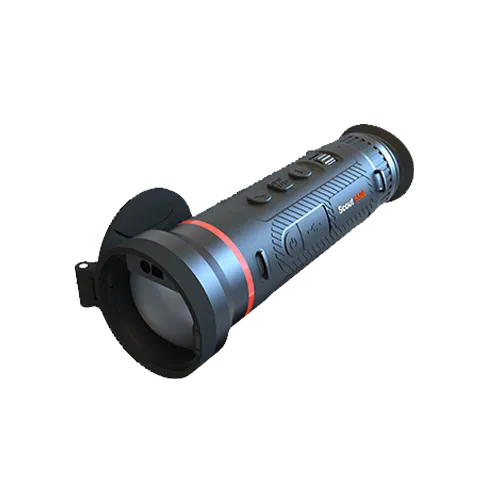
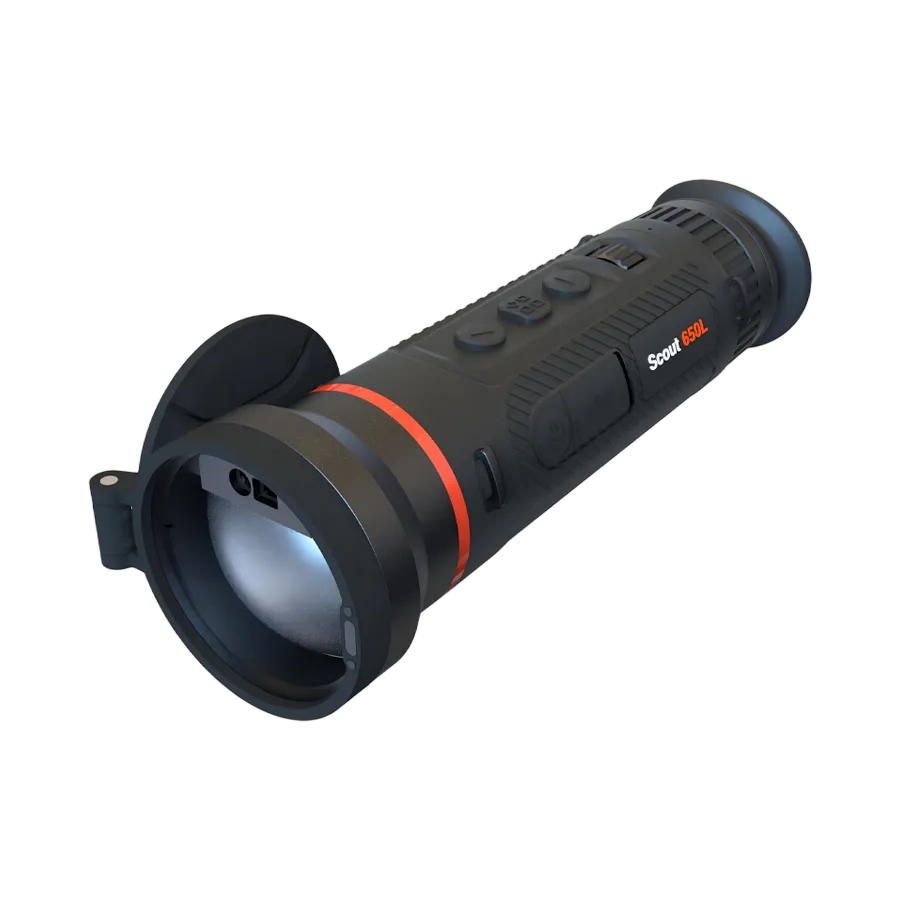
Understanding where and how a thermal monocular shines turns a technical device into a practical asset. Modern high‑performance monoculars, such as those in the Vulcan Scout Series, push sensitivity and usability further with advanced features tailored for real‑world hunting and observation.
Unmatched Detection in the Field
With a breakthrough NETD of less than 15mK, the detector captures even the slightest temperature differences. This ultra‑low NETD means that animals partially hidden by brush, or a person at the edge of a fog bank, appear with clear outline and natural detail. Hunters can distinguish an animal’s body shape, movements, and even unique behavioral traits, supporting precise trophy recognition and confident decision‑making.
Smooth, Fluid Tracking
A high 50Hz refresh rate delivers smoother imagery with faster response. When observing fast‑moving prey, targets remain continuous and detailed, free of smear or lag. This upgrade keeps the hunter locked on target through rapid motion, ensuring no critical moment is missed.
Intelligent Image Processing
Vulcan’s proprietary AI‑powered algorithm adapts to changing scenes without manual adjustment. It dynamically optimizes visuals in strong light, backlighting, or shifting weather, effectively reducing environmental temperature noise while enhancing contrast and preserving fine details. The result is a consistently vivid, true‑to‑life image that keeps you oriented in any scenario.
Extended Reach and Precision
Detection range reaches up to 2600m, giving hunters a significant advantage in open terrain. Combined with an ergonomic focus wheel that allows single‑hand, glove‑friendly adjustment, and an integrated laser rangefinder accurate to ±1m within 1200m, the Scout Series monocular delivers not just detection but the precise distance information needed for long‑range engagements.
Built for Real‑World Endurance
Low‑power design powered by a single 21700 battery yields up to 7.5 hours of continuous runtime. Smart shutter reduction learns background grey levels to minimize calibration pauses, keeping observation stable and uninterrupted. These practical features ensure that the monocular stays ready throughout long hunts, patrols, or search operations.
Conclusion
Thermal monoculars deliver heat‑based vision that outperforms night vision in darkness and bad weather. With advanced sensitivity, intelligent processing, and rugged endurance, modern thermal monoculars are essential for anyone who needs reliable detection and targeting when conditions are at their worst.
References
FOLLOW US:
Follow us on social media and keep in touch.
SUBSCRIBE:
At Vulcan, we specialize in Outdoor Optics.
Latest News About Vulcan